
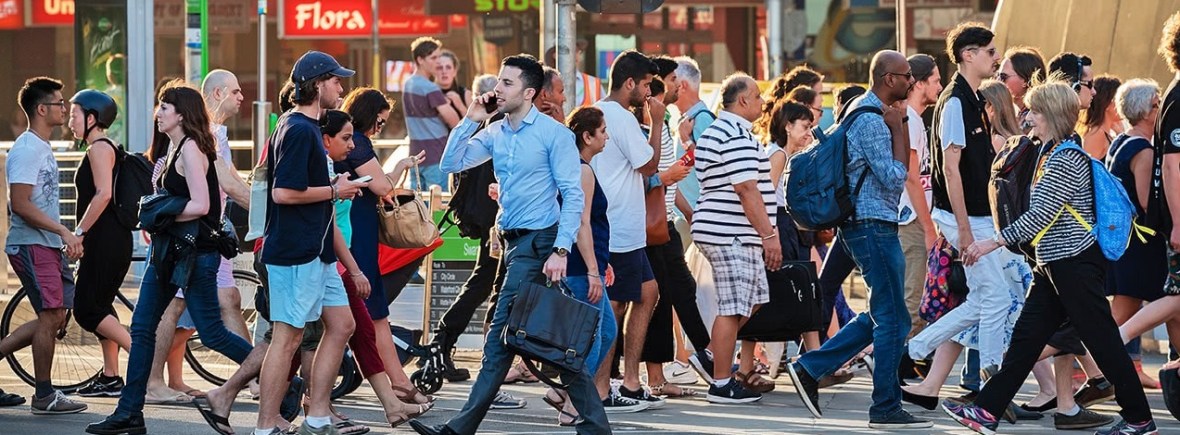
Melbourne Community is a social movement of people who want to build a friendly, safe and cohesive interactive community for its 5.4m residents.
Melbourne’s people have come from 200 countries, speak 233 languages and dialects, and follow 116 religious faiths. We are the most ethnically diverse city in the world.
But in our city there is nowhere near enough personal and social interaction between people of different ethnicities and cultural backgrounds. The opportunities for good conversation or friendship with people who are different from ourselves are too few. Most of our neighbours are strangers to us.
Our people are living longer than any previous generation in history. Yet many older people know fewer younger people than ever. Our extended families are getting smaller and smaller. The generations are increasingly living separate lives. We bump into neighbours, colleagues and commuters occasionally, but for most of us it’s too infrequent and haphazard to make solid connections.
We are an opt-in social movement with local chapters across the city. We aim to bring people together, one to one, in every street in Melbourne to build community relationships in three practical ways:
Talking in English and Other Languages
Sharing Home Produce
Supporting Ageing People Living at Home
We are based in Melbourne because we want to find a method of building community that works in our city. After that we may extend our movement elsewhere.
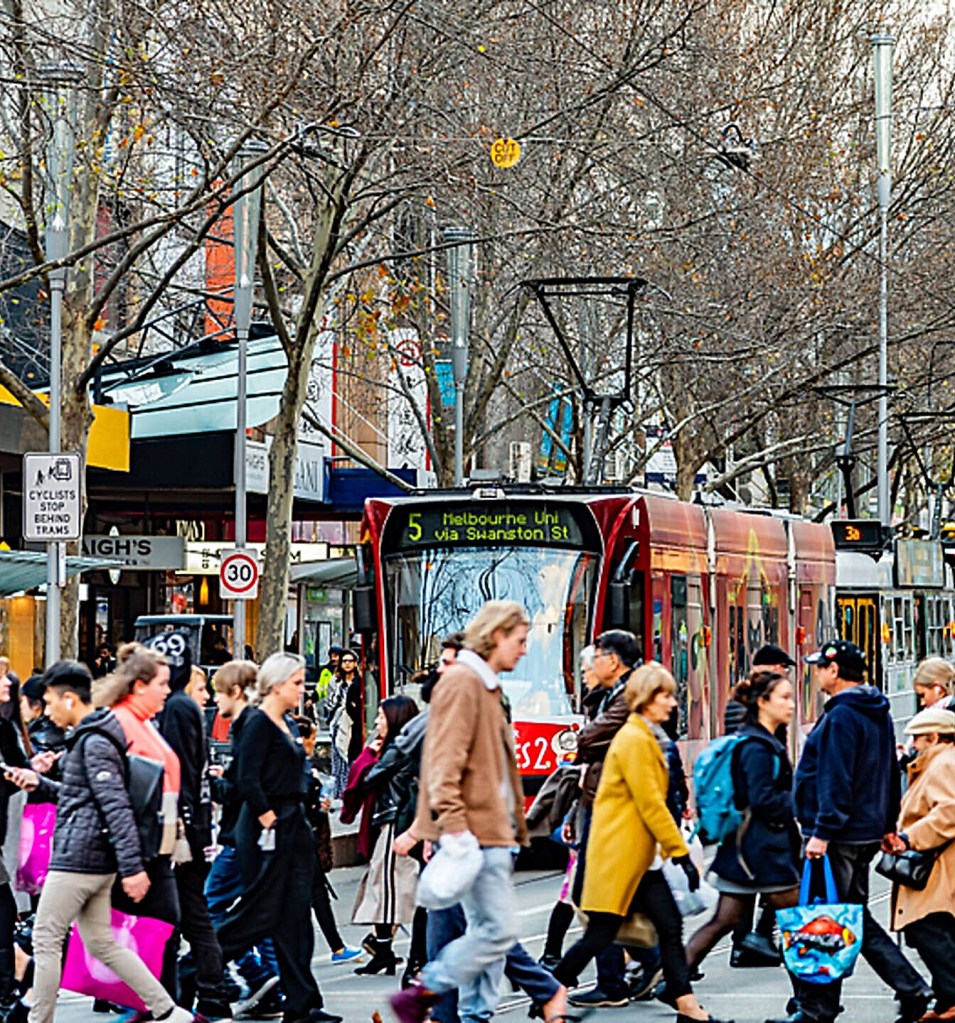
Talking in English and Other Languages
In every street in Melbourne, there is a person learning English, who needs conversation practice with someone local and friendly.
And in the same street, there are people living alone, good speakers of English, who yearn for conversation with someone local and friendly.
What if these people could be paired up, to talk to each other?
And in every street in Melbourne, there is also person learning a language other than English who needs a conversation partner, someone who is fluent in that language, who lives locally. Some of these learners are students, of all ages. Some are planning to travel overseas. Some just want to broaden their outlook and sharpen their mind.
And in the very same street, there will be people who grew up speaking a language other than English who would like to assist someone local in learning that language.
What if all these people could be paired up to talk?
Action: We want to pair up individuals in every street in Melbourne who are learning English or other languages with residents who are good in English or another language, for conversation. One to one, in every street, in every suburb.
Sharing Home Produce
Most households in Melbourne produce at least some fruit, vegetables, jams, cookies or other goods that can be shared. Nothing creates good vibes and friendship like a gift of home-made produce to neighbours. The more that is shared, the more good karma and friendships will follow.
Action: We want to connect up individuals in every street in Melbourne who have home produce they are willing to share with neighbours.
Supporting Ageing People Living at Home
In every street in Melbourne, there are elderly people living at home who need assistance with practical tasks that are beyond them.
Our ResponseOur parliaments and governments are now made up of the wrong sort of people. Instead of people with track records as problem solvers, innovators, community builders, entrepreneurs, thinkers and system designers, we have people who have mostly only ever done one thing – play politics. So long as this continues, we have no hope of meeting the many challenges facing the country.
We need a once-in-a-generation replacement of the current crop of politicians with a new batch of representatives who have proven track records in bringing people together, solving problems, and leading.
To enable this change, we will conduct Community Preselections to allow community members to select a community leader to represent them in parliament.
This process allows the community to bypass the party preselection processes of Liberal, National, Labor and Green parties which function as gatekeepers and protectors of our broken political system.
The Mechanism
The Community Preselection process in each electorate will comprise three steps:
1. An invitation to community members to register as Community Preselectors in their electorate;
2. A call for nominations for Community Representatives (candidates); and
3. An online vote in each federal electorate by Community Preselectors for their preferred Community Representative.
Timeline
March 31 2024: Close of nominations for Community Representatives
April 14 2024: Close of registration for Community Preselectors
May 1 2024: – Online voting day to select Community Representatives
Eligibility
To be eligible to participate and vote in the Community Preselection, community members must:
a. register as a Community Preselector with a $10 registration payment (to cover administrative costs); and
b. declare that they are not a current or recent member of Labor, Liberal, National, or Green parties.
The Criteria for Community Representatives (Candidates)
Community members may nominate as a Community Representative who:
a. have a history of bringing people together for the common good and a history of voluntary contribution in their electorate;
b. have a track record as a community leader, problem solver, innovator, community builder, entrepreneur, thinker or system designer;
c. are capable of representing the issues and challenges facing their electorate;
d. are capable of building trust and confidence in local democracy;
e. are able to mobilise community members in winning a seat in parliament, and
f. are not current or recent members of Labor, Liberal, National, or Green parties.
Register your Interest
Our goal is to have as many community members as possible participate in the preselection ballot in each electorate.
To participate and vote as a Community Preselector, register using this form.
To nominate as a Community Representative (Candidate) , register using this form.
Oversight
The Community Preselections process is hosted and supervised by the Steering Committee of The Sensible Centre.

